Learn AI by using it on small real tasks.
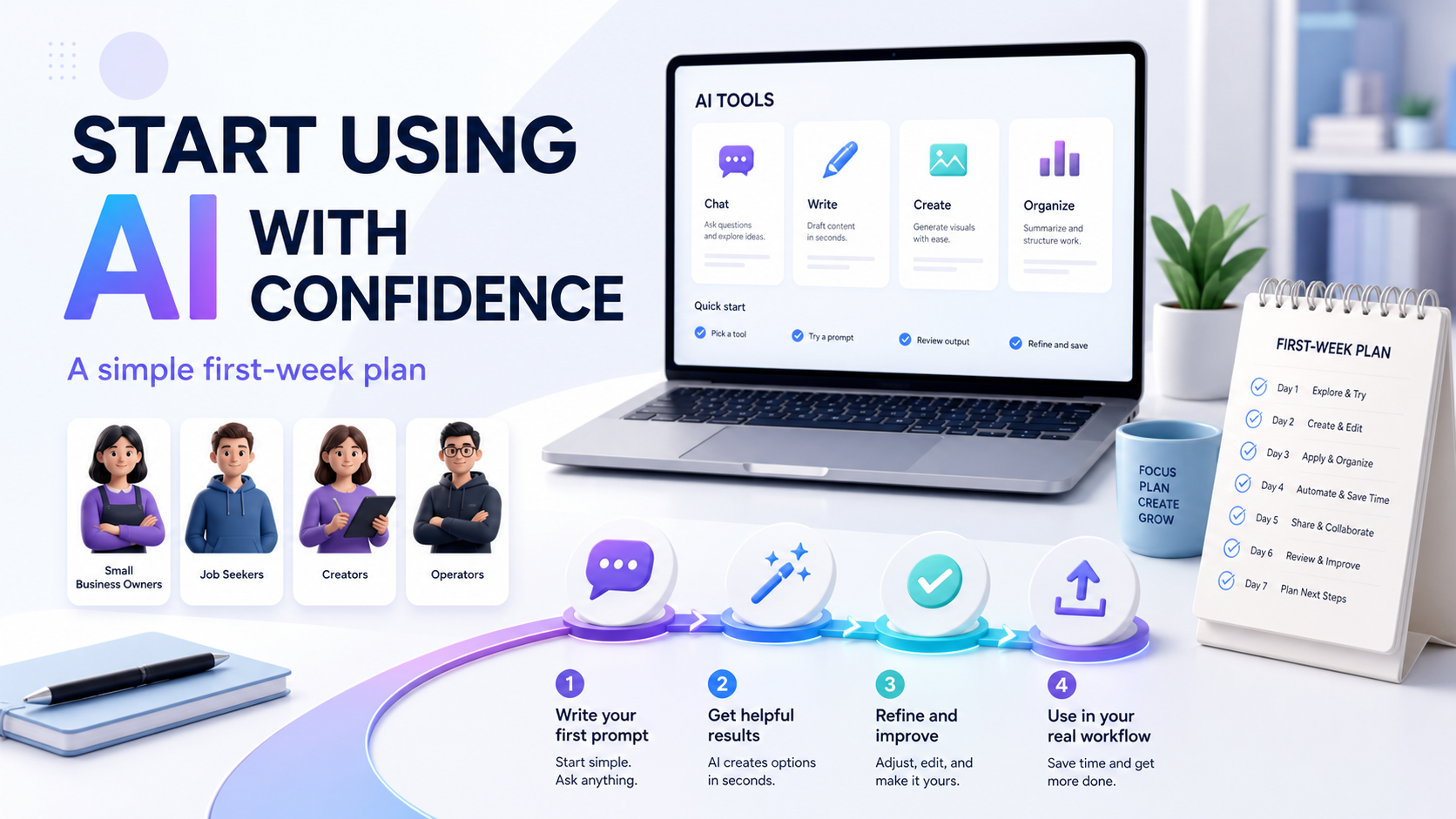
The goal is not to master every app. The goal is to learn how AI fits into your actual day. Use this simple first-week plan to build comfort before choosing a bigger stack.
If AI tools feel overwhelming, start here. This guide walks you through the first practical steps, the safest way to test tools, and how to turn small wins into real confidence.

Pick one thing you already do every week, such as writing an email, summarizing notes, planning content, comparing tools, or organizing a project.
You do not need technical language. Tell the AI what you are trying to do, who it is for, what tone you want, and what a good result looks like.
AI is useful, but it still needs judgment. Check facts, rewrite anything that sounds off, and never let a tool publish or send important work before you approve it.
When a prompt gives you a useful result, save it. Confidence grows when you build a small personal playbook instead of starting from scratch every time.
The goal is not to master every app. The goal is to learn how AI fits into your actual day. Use this simple first-week plan to build comfort before choosing a bigger stack.
Most beginners struggle because they start with too many tools at once. Pick the path that matches your immediate need, get one useful result, then build from there.
Start with beginner prompts for emails, outlines, summaries, and everyday communication.
Browse free trials and test one tool against a real task before adding anything else.
Use Discover when you are ready to connect tools into a practical stack for a business outcome.
Start with simple templates that save time without giving AI too much control too soon.
A good AI trial should make one task easier, clearer, faster, or better. If it does not create a useful result after a fair test, skip it and move on.