Wellness & Health Dec 5, 2025 11 min read
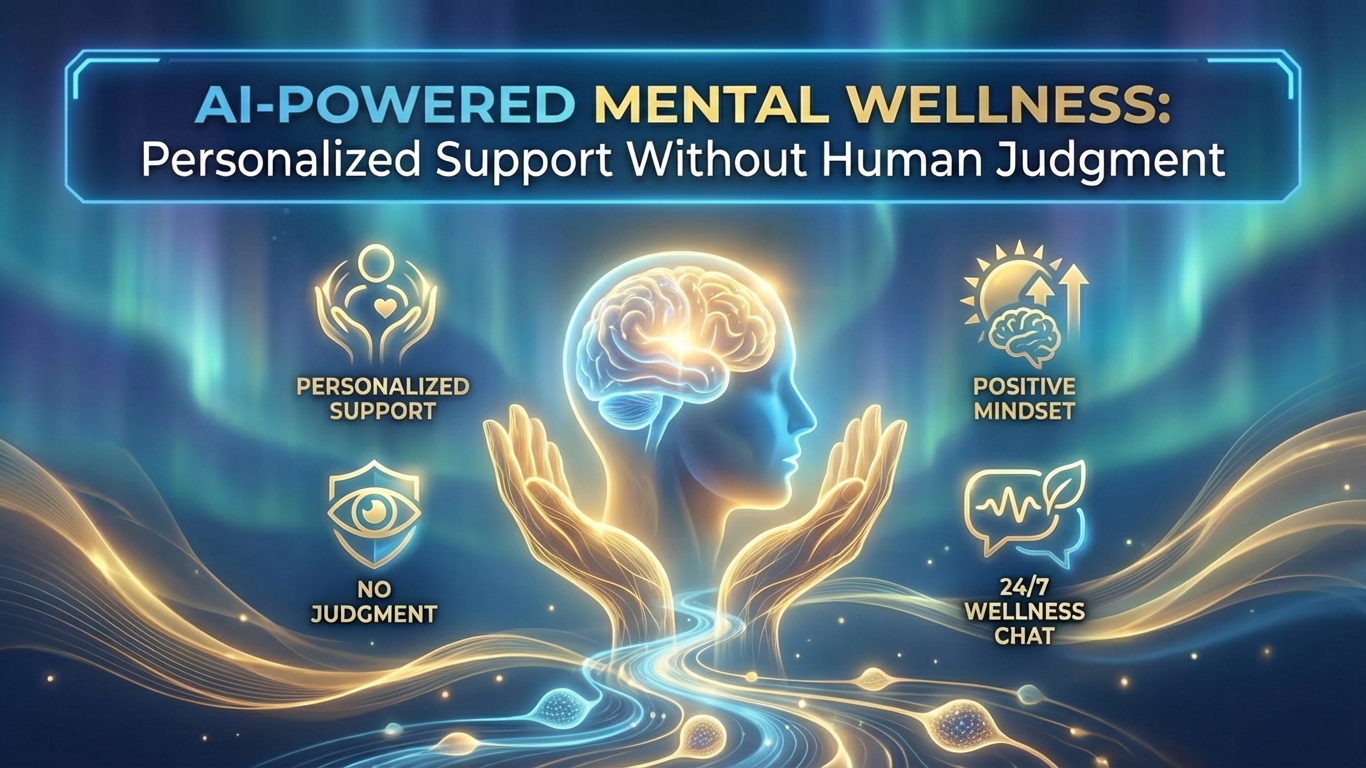
AI-Powered Mental Wellness: Personalized Support Without Human Judgment
The intersection of AI and mental health is creating unprecedented opportunities for personalized, non-judgmental support. In 2026, a new generation of tools is making mental wellness more accessible, affordable, and stigma-free than ever before. Unlike traditional therapy—where availability is limited, cost is prohibitive, and many people fear judgment—AI-powered mental wellness tools offer 24/7 support that adapts to your unique needs.
The Mental Health Crisis and Why AI Is Part of the Solution
The statistics are sobering. Depression, anxiety, and burnout are at all-time highs, yet access to mental health professionals has never been more limited. The average wait time to see a therapist is 3-6 months. Therapy sessions cost $150-300 per hour. Many people don't seek help because they fear judgment or stigmatization. This gap between need and access is where AI-powered mental wellness tools are stepping in, not to replace therapists, but to provide immediate, personalized support that bridges the gap between crisis and care.
How AI Understands Your Mental Health Better Than You Might Think
AI mental wellness tools work by analyzing patterns in your mood, behavior, sleep, stress levels, and daily activities. Unlike a therapist who sees you once a week for an hour, AI systems can monitor your mental state continuously, identify patterns before they become crises, and offer interventions precisely when you need them most.
The beauty of AI is that it's judgment-free. You can confess struggles, share vulnerabilities, and explore difficult emotions without worrying about being labeled or judged. The AI isn't going to remember your admission in a file that could affect your insurance coverage or employment prospects. This psychological safety is revolutionary for people who've been traumatized by the healthcare system or who live in communities where seeking mental health support carries social stigma.
Tools Transforming Mental Wellness in 2026
1. Mindful Creativity: Museit.art's Revolution in Mental Engagement
**Museit.art represents a paradigm shift in how we approach mental wellness for creative individuals. Rather than treating mental health as a separate category from creative fulfillment, Museit.art integrates them into a single, cohesive experience.
The daily creativity tasks on Museit.art are engineered to activate your brain's reward systems while keeping your mind engaged in the present moment. Each task is different—sketch a texture, write a micro-story, create a color palette—but they all share a common thread: they're short (1-5 minutes), achievable, and deeply satisfying. For creatives struggling with perfectionism or creative blocks, these tasks provide structure without judgment.
What makes Museit.art particularly powerful is the "mindful scrolling" feature. Instead of doomscrolling through social media—which studies show increases anxiety and depression—users scroll through a curated feed of other creators' work, community challenges, and inspiration prompts. Every scroll is an opportunity to feel connected to others, discover new techniques, and feed your creative spirit. The subtle brilliance is that this is happening while your brain chemistry is in an optimal state for learning and connection. Research shows that this combination—structured creativity + community connection + no algorithmic toxicity—significantly improves mood, self-esteem, and sense of purpose.
For someone experiencing depression or creative burnout, Museit.art becomes a daily ritual that gently nudges them toward engagement and meaning. It's not about producing "good" art; it's about the process of creating, which research shows has profound mental health benefits.
2. AI Therapy and Emotional Support: Woebot and Clara
Woebot has become the default first line of defense for anxiety and mild depression. Using evidence-based cognitive behavioral therapy (CBT) techniques, Woebot engages users in conversations that help identify thought patterns, challenge distortions, and build resilience. The interface is playful, non-threatening, and accessible to people who might never seek traditional therapy.
Clara takes this further with more sophisticated emotional intelligence. It can detect when you're in crisis and escalate appropriately, offer meditation and breathing exercises, and provide resources for specific mental health conditions. The remarkable part is that Clara learns your communication style and personalizes interventions accordingly. Someone who responds well to tough love gets different messages than someone who needs gentle support.
3. Sleep Optimization: Sleep.com and AI Coaches
Mental health and sleep are inseparable. AI sleep coaching tools analyze your sleep patterns, identify disruptions, and provide personalized recommendations. Unlike generic sleep advice, AI coaches understand that what works for someone with anxiety might be different from what works for someone with bipolar disorder or ADHD.
4. Stress Management Through Biometric Feedback: Muse and Oura Ring AI
The Muse headband uses EEG technology to detect when your brain enters "calm mode," gamifying meditation and mindfulness practice. The Oura Ring combines heart rate variability, body temperature, and sleep data to assess your stress level and suggest interventions before stress becomes burnout.
5. Social Connection and Accountability: Replika and AI Companions
For people experiencing loneliness or social anxiety, Replika provides a non-judgmental companion that's available 24/7. While not a replacement for human connection, Replika offers consistent support, helps users practice social interactions in a safe environment, and provides continuity of care during crisis moments.
The AI Mental Wellness Stack: How to Build Your System
The most effective approach to AI-powered mental wellness isn't using a single tool but orchestrating a system. Here's a practical stack:
Foundation Layer: Daily Engagement
- Museit.art for creative engagement and community connection
- Woebot or Clara for daily emotional check-ins and support
- Muse or similar for daily meditation practice
Monitoring Layer: Awareness
- Oura Ring or smartwatch data integrated with AI analysis for stress/sleep tracking
- AI journaling apps that analyze mood trends over time
- Integration with health apps to correlate physical and mental wellness metrics
Intervention Layer: When You Need Support
- Clara or Woebot for immediate emotional support
- Crisis resources and escalation protocols
- Connection to human therapists when appropriate
The Research Supporting AI Mental Wellness
Multiple peer-reviewed studies have validated the effectiveness of AI mental wellness tools:
- Users of cognitive behavioral therapy (CBT) chatbots show 30-50% improvement in anxiety and depression scores comparable to therapy with human therapists
- Regular meditation practice through apps like Woebot reduces cortisol levels and improves sleep quality
- Creative engagement (like Museit.art's daily tasks) activates the default mode network, which is crucial for emotional regulation
- Community connection and reduced social comparison (offered by platforms with no algorithmic ranking) improves self-esteem and reduces depression
The Limitations and When to Seek Human Help
It's crucial to be honest about what AI mental wellness tools can and cannot do. They're exceptional at providing:
- 24/7 support and immediate interventions
- Coping strategies and emotional regulation techniques
- Trend detection and early warning systems
- Reduced stigma and judgment-free space for exploration
But they cannot:
- Diagnose psychiatric conditions (they can help you recognize patterns, but diagnosis requires medical expertise)
- Provide medication management or crisis intervention beyond escalation
- Replace therapy for trauma, complex mental health conditions, or severe mental illness
- Offer the human connection and empathy that's sometimes essential for healing
The most successful mental health outcomes in 2026 combine AI tools with human support. Someone might use Museit.art daily, Woebot for ongoing support, and Clara for crisis moments, but they also work with a therapist who reviews progress and adjusts their approach based on data the AI tools provide.
The Bigger Picture: Mental Wellness as Prevention
One of the most overlooked benefits of AI mental wellness tools is their preventative power. Rather than waiting until someone is in crisis to intervene, these tools help people recognize and address mental health challenges early, often before they develop into clinical conditions.
Imagine a professional who starts using Museit.art for creative engagement and notices their mood lifting. They start meditating regularly with Muse. Their Oura Ring shows improved sleep quality. They connect with other creatives through the Museit.art community. Small interventions, stacked together, prevent the slide into depression that might otherwise lead to seeking medication or therapy.
This is the true potential of AI in mental wellness: not replacing human care, but creating an environment where mental health is prioritized, supported, and de-stigmatized.
The Future of Mental Health
In 2026, we're at an inflection point. AI mental wellness tools have proven their effectiveness. Cost barriers are coming down as tools scale. The stigma is lifting as more people openly discuss using them. The remaining question isn't whether AI can contribute to mental wellness—it's how quickly we can make these tools universally accessible.
The vision isn't a world where everyone abandons therapy for AI. It's a world where everyone has immediate access to support when they need it, where creative expression is recognized as mental health medicine, where nobody has to wait months or pay hundreds per session to get help, and where community connection and mindful engagement are the default, not the exception.
Museit.art, Woebot, Clara, Muse, and other tools in this category are proving that this vision is possible. The future of mental wellness isn't about replacing human connection; it's about supporting it with technology that meets people where they are, when they need it most.**