
The Rise of Agentic AI: How Autonomous Tools Are Redefining Productivity in 2026
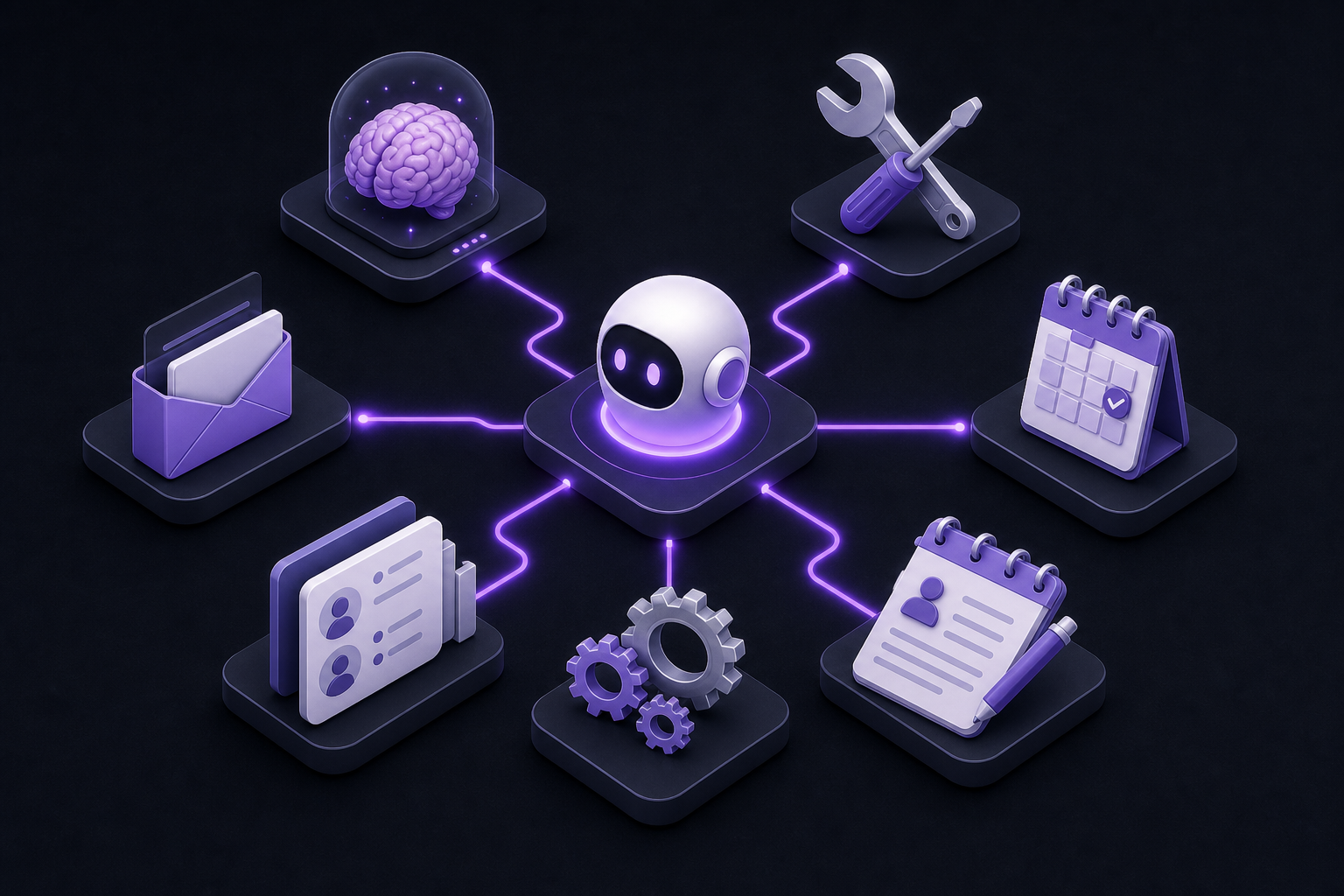
Most AI still waits for a prompt. Agentic AI does not. It plans a goal, uses tools, checks its own work, and moves a real workflow forward—calendar, inbox, CRM, support, reporting—while you stay on judgment and relationships.
That is why searches for agentic AI, autonomous AI agents, AI workflow automation, and AI digital employees keep rising in 2026. The hype says "replace your team." The useful version is narrower: turn coordination work into agent loops so humans stop being the glue between apps.
This guide explains what agentic AI actually is, which productivity jobs it should own first, and how to assemble a reliable stack from Skowers—without buying five agents that fight over your calendar.
What Agentic AI Actually Means
Agentic AI is not a better chatbot. It is a system that can:
- Accept a goal, not only a single question.
- Break the goal into steps.
- Use tools (calendar, email, CRM, ticket system, scrapers).
- Observe results and self-correct.
- Hand off to a human when confidence or risk is wrong.
If the model only drafts text you must paste somewhere, you have assistance. If it can schedule, update records, trigger workflows, and report back, you have an agent.
Keep the autonomy ladder:
- Suggest — drafts and recommendations only.
- Assist — acts on low-risk tasks with notification.
- Autopilot — completes routine work inside written rails.
Track trials and seats in the Skowers Dashboard so agent sprawl does not become a second payroll.
Start With One Job Description
Do not "adopt agentic AI." Hire an agent for one role:
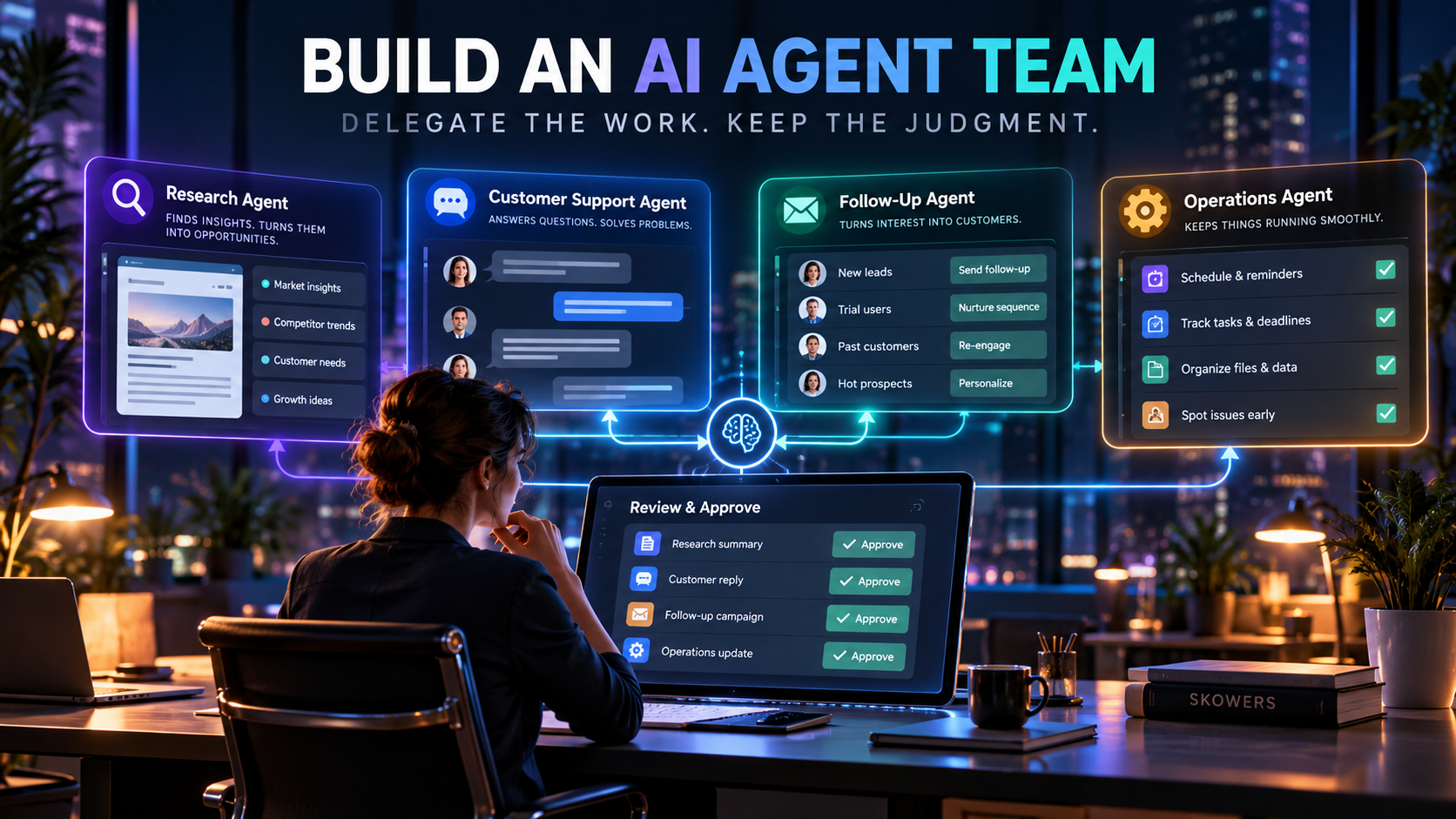
- Executive admin — inbox triage, scheduling, follow-ups.
- Meeting intelligence — capture decisions and push next steps.
- Ops coordinator — move data between apps after forms, orders, or tickets.
- Support first-responder — answer, qualify, escalate with rules.
- Research watcher — monitor competitors and compile briefings.
Write the job like a hire: mission, tools allowed, what it can decide alone, what needs approval, how you measure success in 14 days.
Core Stack: Admin, Meetings, Orchestration
Lindy is the personal/ops agent for calendar, email, and recurring admin workflows. Give contextual rules—"deep work mornings, client calls afternoons"—instead of brittle if/then scripts. Expand scope only after a week of clean reviews.
Laxis is the meeting agent. It does more than transcription: decisions, commitments, and CRM-ready summaries so sales and delivery teams leave calls with systems updated, not notebooks full of forgotten action items.
n8n is the orchestration layer. When work must span many apps—support inbox → categorize → refund policy → Slack escalate → CRM note—n8n is how you build durable agent loops instead of hoping one SaaS speaks to every tool.
Together they cover the classic agentic productivity triangle: communicate, remember meetings, connect everything else.
Calendar Defense Completes the Ops Agent
Agents that book freely will destroy focus. Pair Lindy with Reclaim so focus blocks, habits, and buffers stay protected while scheduling still moves.
Calendar checklist:
- Write hard constraints before connecting agents.
- One priority order for who can book time.
- Daily review of agent schedule changes for week one.
Customer and Support Agents Need Governance
Website and support agents are agentic productivity too—they reclaim founder hours—but they touch revenue and reputation.
Tidio and Landbot handle inbound chat, FAQs, qualification, and booking when the job is conversion on the site.
Typewise fits when you need omnichannel agents with human control, approvals, and audit trails as volume grows.
Rule: draft and escalate early; autopilot refunds, legal language, or VIP accounts only after measured accuracy.
Memory Needs a System of Record
Agents without memory reinvent the customer every session. Keep relationship truth in a CRM such as Capsule CRM so notes from Laxis and follow-ups from Lindy land somewhere durable.
For research watchers, Browse AI can scrape and monitor pages so an ops agent starts the day with signal, not blank search tabs.
When You Need Company-Wide Agentic Ops
A founder stack is enough for personal productivity. If the goal is AI-native process design across departments—SOPs, operators, ongoing management—look at partners like Dry Ground AI rather than bolting random agents onto broken processes.
Agentic productivity fails most often because the process was never clear. Fix the process, then automate.
Three Ready Agentic Stacks
Solo founder stack
- Lindy for inbox + scheduling.
- Reclaim for focus defense.
- Laxis for meeting memory.
- Dashboard for trial tracking.
Sales-led team stack
- Laxis on every discovery call.
- Capsule CRM as system of record.
- Lindy for follow-up admin.
- n8n to sync stages, alerts, and handoffs.
Support + ops stack
- Tidio or Landbot on the site.
- Typewise when channels multiply.
- n8n for routing and side effects.
- Human approval gates on money and edge cases.
30-Day Implementation Plan
Week 1 — Audit Track every task over 15 minutes. Mark coordinator work vs judgment work. Pick one agent job.
Week 2 — Deploy Stand up Lindy or Laxis on Suggest/Assist mode. Write rules. Review daily.
Week 3 — Orchestrate Connect one n8n workflow that removes a copy-paste loop (form → CRM → Slack, or meeting notes → task → email draft).
Week 4 — Expand carefully Add Reclaim, CRM discipline, or a chat agent only if week 2–3 metrics moved. Autopilot only proven low-risk actions.
Delegation vs Orchestration
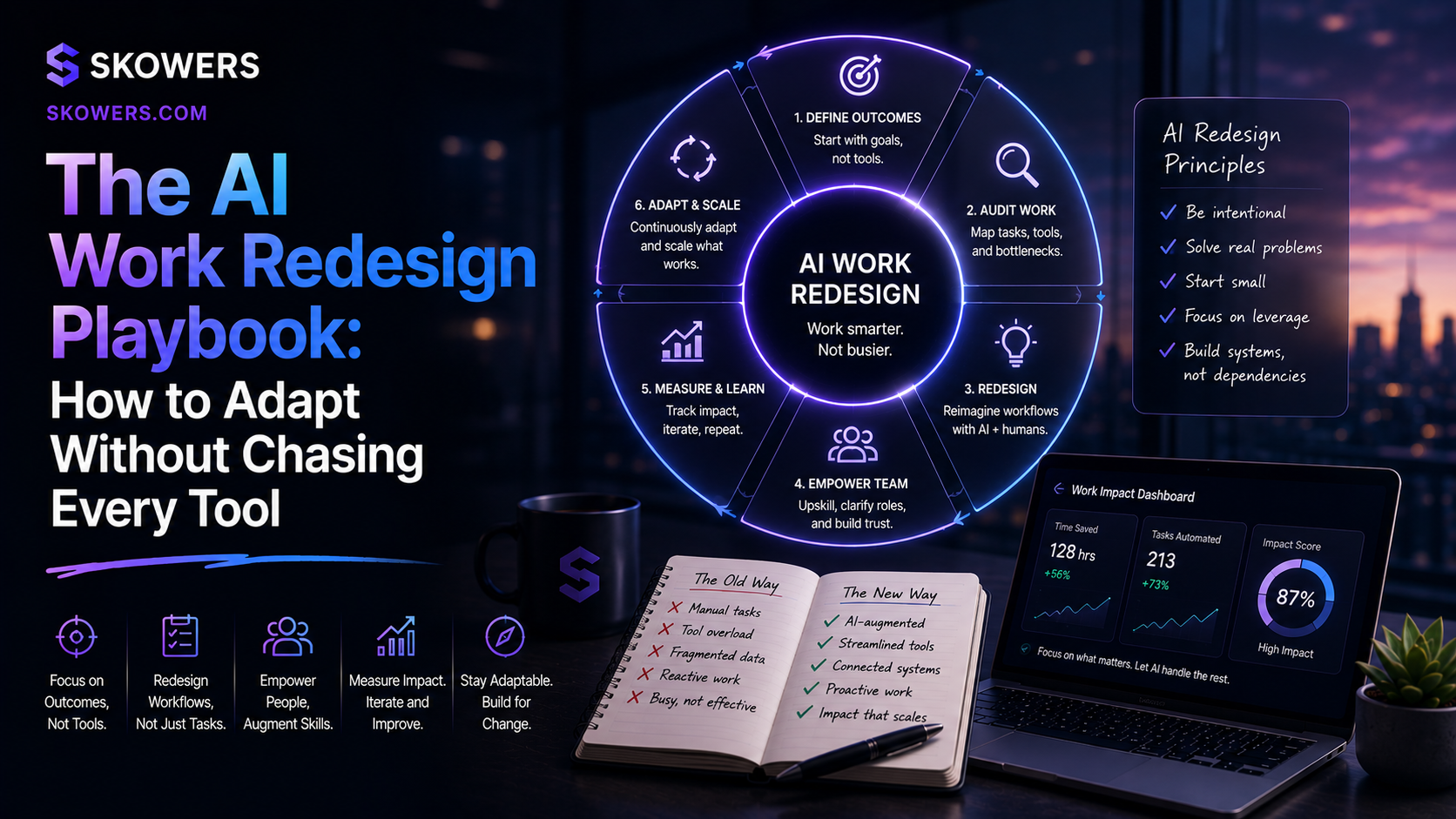
Delegation keeps the same workflow and swaps who clicks. Orchestration redesigns the path: information routes itself; humans enter at decisions.
Ask before every hire or process: "Could an agent handle this with oversight?" If yes, design the agent loop before you buy headcount for coordination.
Common Mistakes That Kill Agentic ROI
- Buying three agents before writing one job description.
- Autopiloting email and refunds on day one.
- Meeting notes with no CRM or task owner.
- Letting every tool book the calendar independently.
- Automating a broken process instead of clarifying SOPs first.
- Ignoring Dashboard renewals until five agents quietly stack.
How to Measure Whether Agents Are Working
Track for two weeks:
- Hours spent on coordination vs judgment work.
- Meetings with documented, owned next steps.
- Follow-ups that would have been missed.
- Ticket or lead response time.
- Tool cost versus hours returned.
If coordination hours do not fall, you installed software. You did not build agentic productivity.
Next Step
Pick the bottleneck that steals the most hours this month.
If admin and inbox dominate, start with Lindy and Reclaim. If meetings lose decisions, start with Laxis. If apps do not talk, start with n8n. If support volume is the drain, start with Tidio, Landbot, or Typewise.
Browse more autonomous and workflow tools in the Skowers directory, trial against one named agent role, and keep only the stack that returns time every week.

Related Articles
Continue Your Research