10 Ways AI Is Already Improving Your Life
AI headlines often swing between utopia and collapse. The quieter story is already happening in clinics, classrooms, call centers, labs, and living rooms: systems that reduce waiting, catch risks earlier, translate meaning across languages, and give ordinary people tools that used to require a specialist team.
This is not a prediction piece. It is a look at ten ways AI is improving life right now—concrete use cases with measurable human upside. Where those outcomes overlap with tools in the Skowers directory, we name them so you can explore the same categories people are already using.
1. Faster, Safer Clinical Support
Hospitals and clinics are buried in documentation. Doctors spend hours typing notes, coding visits, and chasing prior authorizations. AI scribes and clinical decision-support systems now listen (with consent), draft structured notes, flag drug interactions, and surface guideline-relevant literature while a clinician stays in charge of the final call.
The human win is not “robot doctors.” It is more face time with patients and fewer exhausted providers drowning in paperwork. In emergency and radiology settings, AI triage models also help prioritize scans and alerts so the most urgent cases rise faster. The quality bar remains human review—especially for high-stakes diagnoses—but the reduction in administrative drag is already changing daily practice.
2. More Personal Learning at Global Scale
Good tutoring has always worked. It has also been expensive and scarce. Adaptive learning platforms now adjust difficulty, explain concepts in multiple ways, and give teachers dashboards that show who is stuck before a test fails an entire cohort.
For students with gaps—missed school, new language, ADHD, or simply an uneven teacher-to-student ratio—AI practice partners create on-demand feedback loops that a single classroom adult cannot provide every minute. The best deployments pair AI practice with human teachers who redesign lessons around where the model shows friction. Education improves when AI removes rote grading and unlocks more coaching time, not when it pretends to replace mentorship.
3. Language Access for Work, Travel, and Public Services
Real-time translation and multilingual voice systems are closing gaps that used to isolate people from healthcare forms, job interviews, customer help, and civic information. Factories, hotels, and city services use AI interpretation so staff and customers who do not share a first language can still complete a task safely.
Voice platforms like ElevenLabs make high-quality speech available in many languages for training, accessibility audio, and localization—useful when a nonprofit, school, or company needs clear narration without booking a studio for every update. The life improvement is simple: fewer people locked out of critical information because of language.
4. Stronger Defenses Against Everyday Cybercrime
Phishing, ransomware, and account takeovers are no longer niche IT problems. They hit families, clinics, and small shops. Modern endpoint and network defenses use AI to spot unusual behavior—strange login patterns, sudden encryption spikes, suspicious email payloads—faster than rule lists alone.
Bitdefender sits in that category for business environments that need layered protection against ransomware and phishing while teams keep shipping. The positive difference is concrete: fewer breached patient files, fewer frozen payroll systems, fewer “pay the ransom or lose Christmas orders” weekends. Security will never be perfect. AI-assisted detection raises the cost of mass attacks and shortens recovery when something slips through.
5. Meetings That Do Not Erase Decisions
Knowledge work still loses hours to meetings that produce no written outcome. AI meeting assistants record (where allowed), transcribe, summarize, and extract action items so the people who could not attend—or who were focused on listening—still get a reliable record.
MeetGeek and Laxis are examples of tools that turn spoken work into searchable notes and follow-ups. For distributed teams, parents on staggered schedules, and accessibility needs (deaf and hard-of-hearing colleagues), that is not a luxury feature. It is equity of information: the same decisions, visible to everyone, without forcing someone to be the unpaid note-taker forever.
6. Customer Help That Answers at 2 a.m.
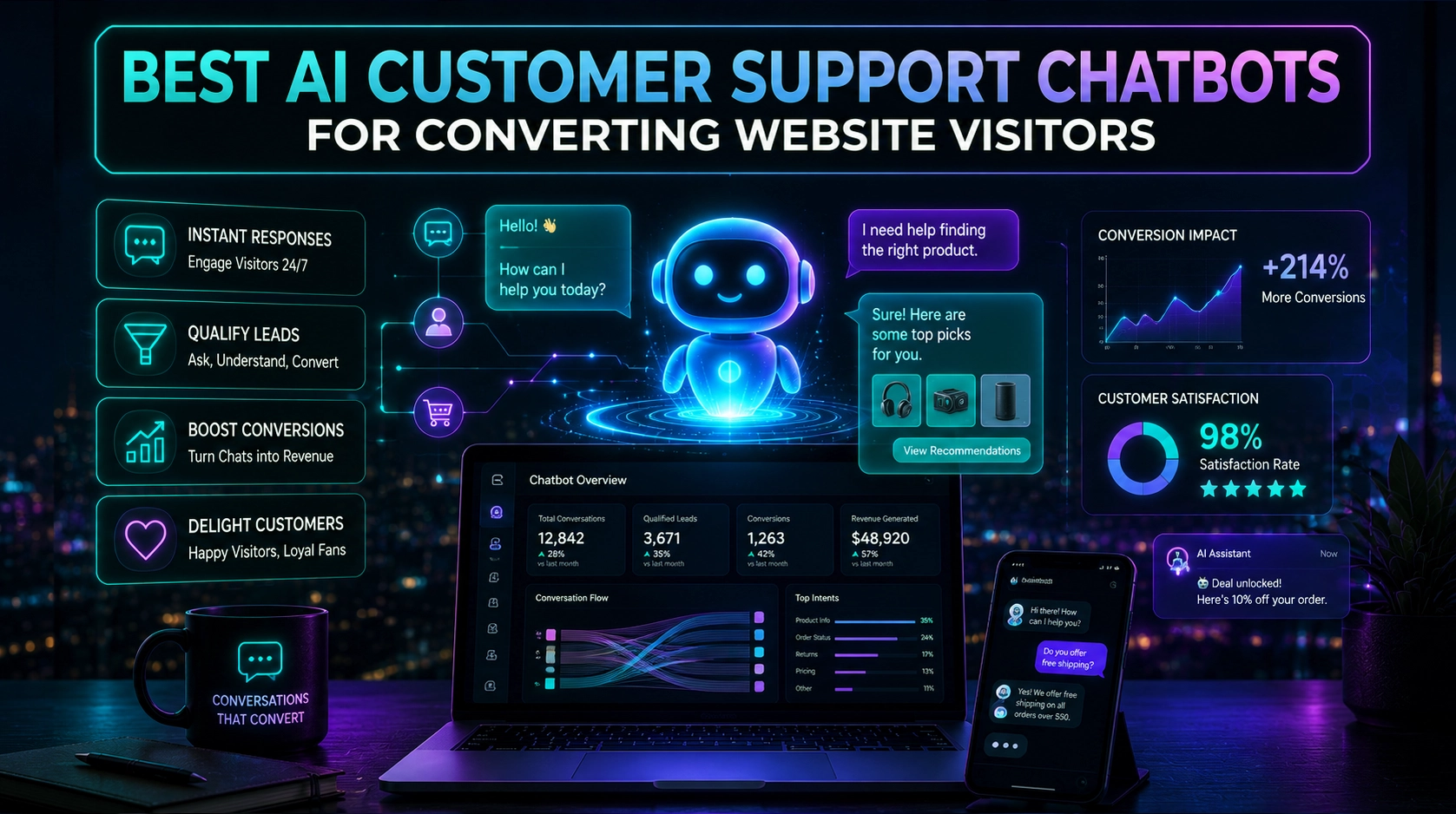
When a package is stuck, a password fails, or a patient portal will not load, people need answers outside business hours. AI support agents now resolve common tickets, gather the right details for humans, and keep tone consistent across chat, email, and messaging apps.
In the Skowers directory, that pattern shows up in tools like Typewise for governed customer-service agents, Algomo for inbound site conversations that qualify and help visitors, Tidio for website chat, and SleekFlow AI for WhatsApp and multi-channel messaging. The life improvement for customers is shorter waits. The life improvement for support workers is fewer repetitive tickets and more time for the cases that need empathy and judgment.
7. Research Answers With Citations, Not Vibes
Search engines and chatbots can invent confident nonsense. Research assistants built on scientific literature try a harder job: answer questions with evidence trails. That matters for journalists, students, clinicians, founders validating claims, and anyone who should not stake a decision on an unverified paragraph.
Consensus is designed around peer-reviewed sources and summaries with study context. It does not replace reading the paper. It reduces the time tax of finding which papers even exist. In a world drowning in content, tools that privilege evidence over engagement are a quiet public good.
8. Accessibility for Vision, Hearing, and Motor Limits
Captions, alt text, screen-reader-friendly layouts, voice control, and text-to-speech are no longer niche checkboxes. They are how millions of people work, learn, and stay socially connected. AI made high-quality captions and speech synthesis cheap enough for small publishers and solo creators—not only Hollywood studios and government agencies.
Descript helps teams edit video and audio with transcripts, which also produces caption-ready text. ElevenLabs gives clear synthetic speech for people who need audio versions of written material. Accessibility is often framed as compliance. In practice it is designing for real bodies and real constraints—and AI finally made that economically realistic for more organizations.
9. Small Organizations Running Like Coordinated Teams
Nonprofits, clinics, and five-person companies used to choose between chaos and expensive software consultants. Automation platforms now connect forms, CRMs, inboxes, and databases so a donation, intake, or lead moves without twelve copy-paste steps.
n8n is a practical example: durable workflows that keep systems talking overnight. Pair that with presentation and packaging tools like Gamma when a team needs to explain a program, pitch funders, or onboard volunteers without a design department. The life improvement is dignity of focus—humans spending time on care, craft, and relationships while machines handle the handoffs.
10. More People Able to Build Useful Software
For decades, “I have an idea that would help my community” died at the wall of engineering cost. AI-native development environments compress that wall. Founders, researchers, and operators can prototype internal tools, accessibility utilities, and local services with agents that edit code, explain errors, and keep project context.
Cursor is one of the clearest examples of that shift: an AI IDE where agents, inline edits, and codebase chat help people ship working software faster. The positive story is not that everyone becomes a Silicon Valley engineer. It is that more problem-solvers can turn a specific need into a working tool—a clinic intake form that actually syncs, a school volunteer scheduler that does not live in five spreadsheets, a local mutual-aid map that stays updated.
What Ties These Ten Together
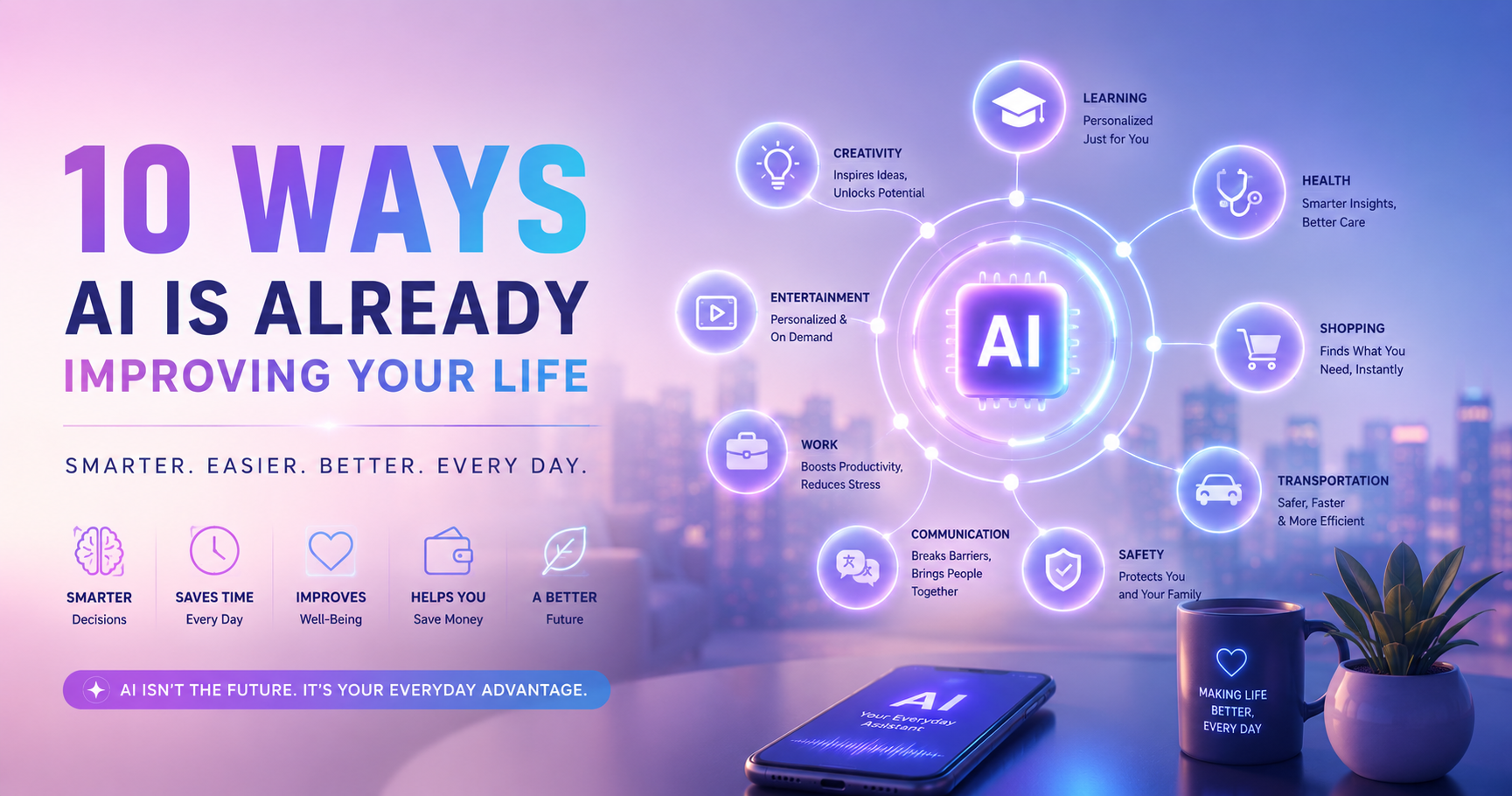
Across medicine, education, language, security, meetings, support, research, accessibility, operations, and software, the pattern is the same:
- AI removes friction from repetitive or specialized work.
- Humans keep accountability for judgment, ethics, and exceptions.
- The winners are systems, not demos—tools wired into real workflows with review loops.
That is also why pairing matters. A support agent without a human escalation path becomes a brick wall. A research summary without citations becomes marketing. A coding agent without review becomes technical debt. Used carefully, the same technologies become leverage for care, clarity, and access.
A Practical Lens for 2026
If you want a simple filter for whether an AI use case is “improving life” or just generating noise, ask:
- Does it reduce harm, waiting, or exclusion for a real group of people?
- Can a human override or audit the important outputs?
- Is the benefit visible in a week of real use—not only in a launch video?
The ten areas above already clear that bar in production settings. The next decade will add more. The work now is less about inventing wonder and more about deploying what works with honesty about limits.
Bottom Line
AI is already improving life where it shortens the distance between a human need and a reliable response: clinical time returned to patients, learning that adapts, languages bridged, attacks blocked, decisions recorded, customers helped after midnight, evidence surfaced, accessibility expanded, small teams coordinated, and software finally within reach of more builders.
None of that requires hype. It requires attention to the boring virtues—accuracy, privacy, escalation paths, and tools chosen for outcomes instead of novelty. That is the version of AI progress worth celebrating in 2026.