
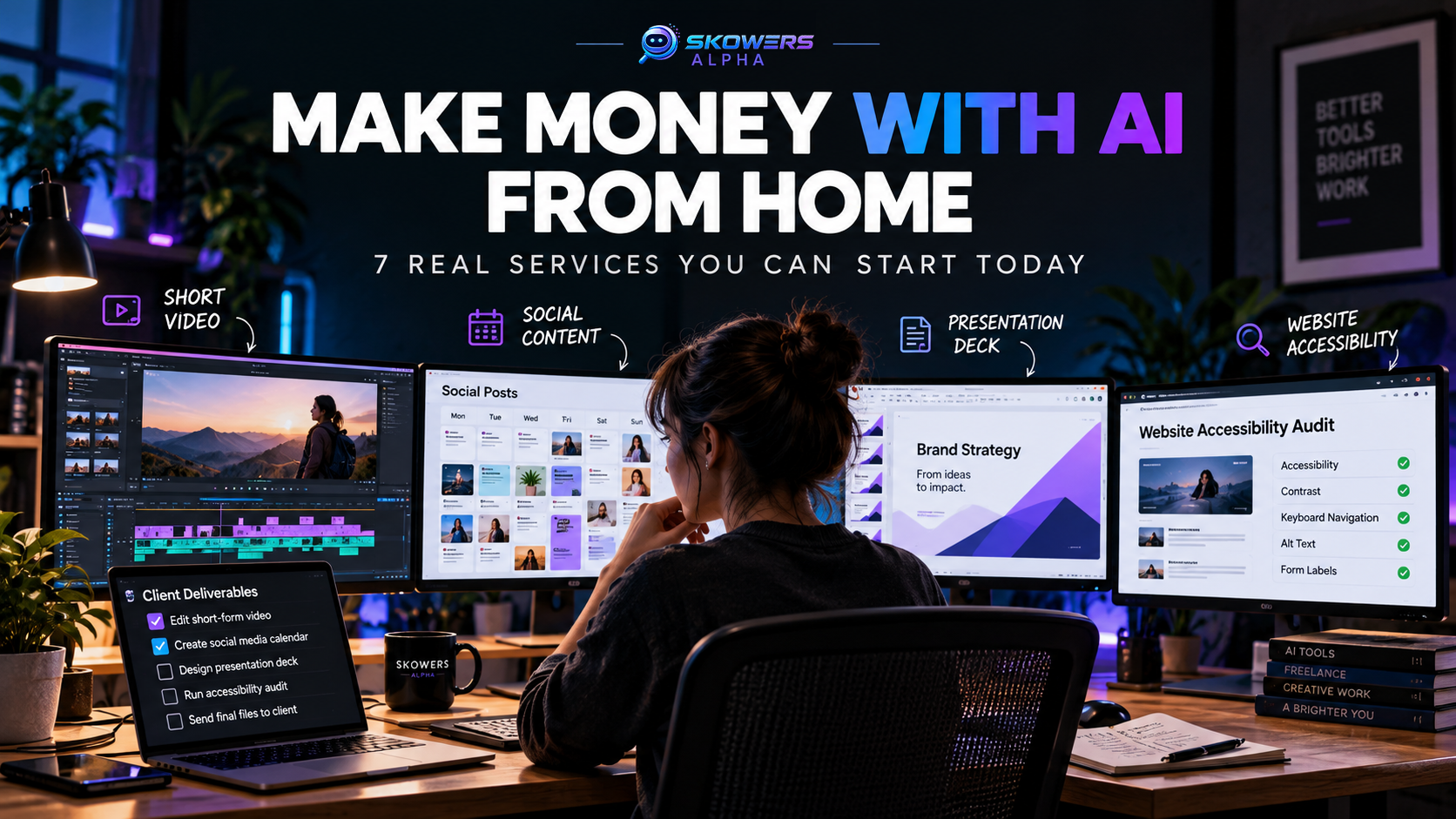
How to Make Money With AI From Home: 7 Realistic Services You Can Start Today
AI can help one person produce useful work faster, but it does not create customers, trust, or income by itself. The most realistic way to make money with AI from home is not to chase passive-income promises. It is to sell a narrow service that solves a problem a specific buyer already understands.
This guide gives you seven services you can test without pretending that results are guaranteed. Each option has a buyer, a deliverable, a same-day validation step, and a way to keep human judgment responsible for the final work.
Last reviewed October 23, 2026. Features and prices change. Confirm current terms before subscribing to any tool.
Skowers may earn a commission from partner links in this article at no additional cost to you. Recommendations are based on practical fit. Buying software is not a substitute for finding a customer and validating an offer.
What “Start Today” Actually Means
Starting today means you can choose an offer, create a small sample, identify likely buyers, and begin useful conversations. It does not mean everyone will earn money today. Demand, skill, proof, pricing, outreach, and follow-through still determine whether a service sells.
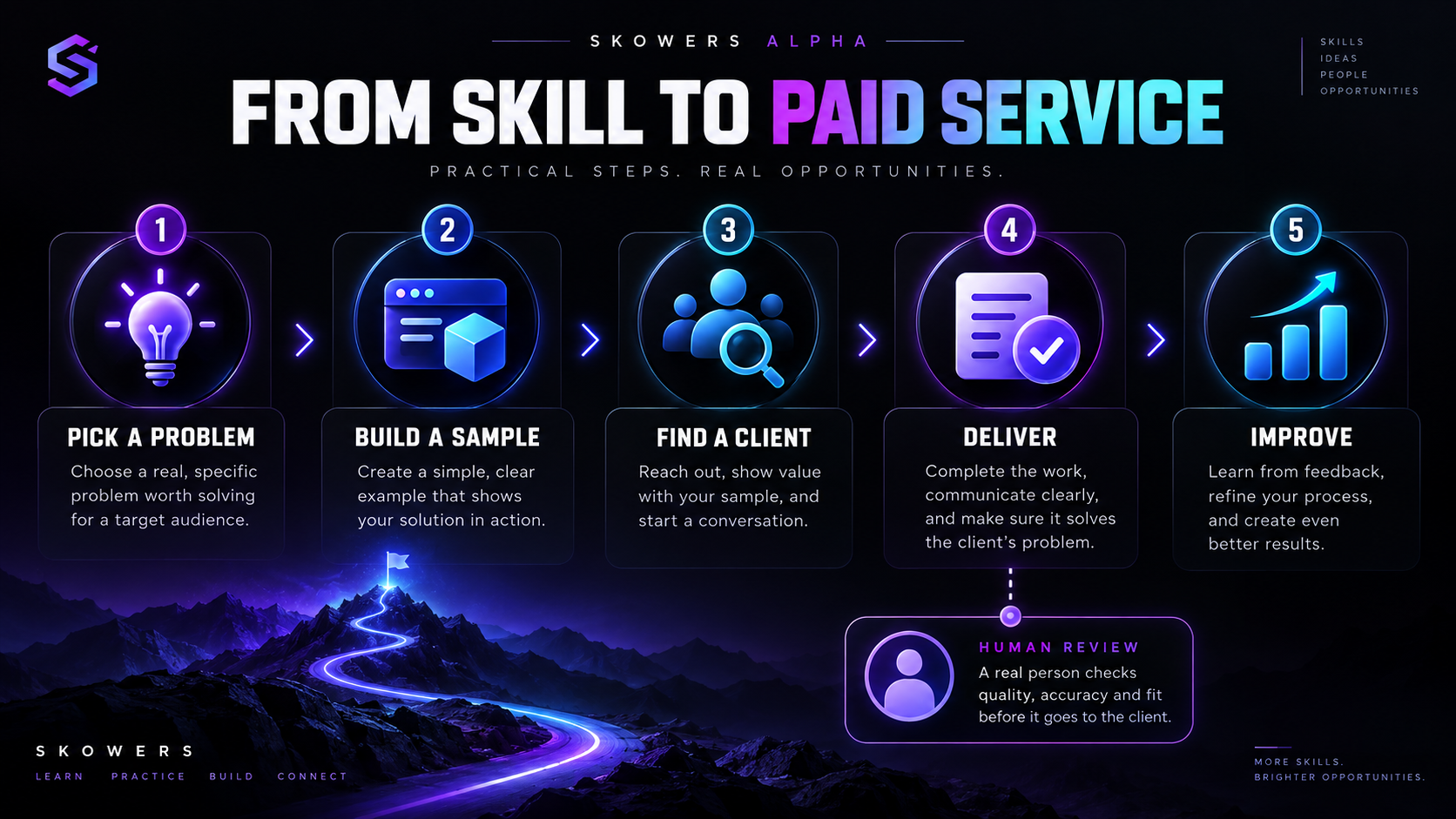
The shortest practical path is:
- Pick one expensive or repetitive problem.
- Create one small sample that shows the result.
- Show it to a specific type of buyer.
- Offer a limited paid pilot with a clear scope.
- Improve the process from real feedback.
copy:Build a narrow service offer|I help [specific type of customer] turn [painful input or problem] into [clear deliverable or outcome] within [timeframe]. The pilot includes [scope], [number of revisions], and a human quality review before delivery.
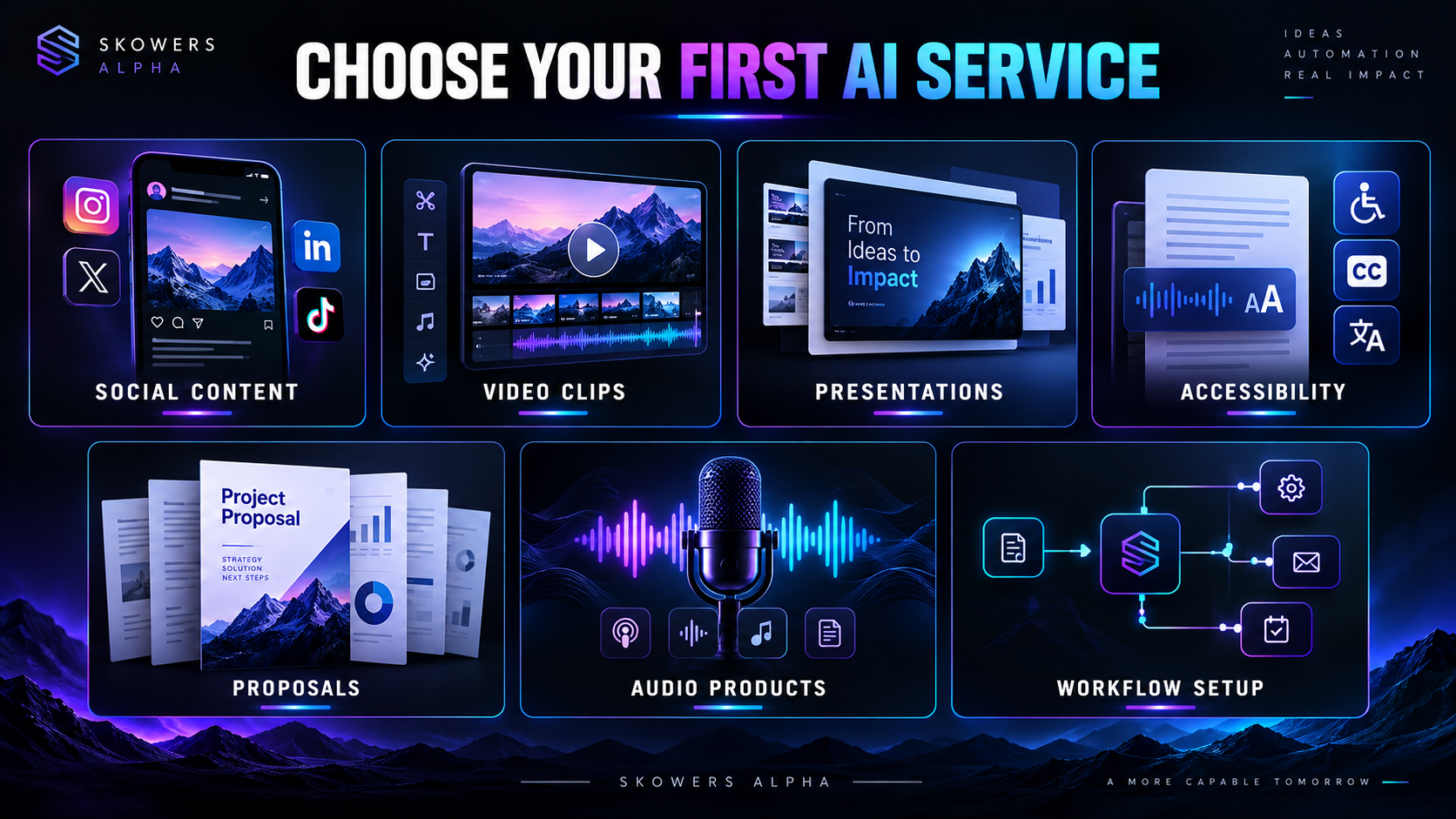
1. Social Content Packages for Local Businesses
Who buys it: restaurants, home-service companies, salons, gyms, independent professionals, and small shops that post inconsistently.
What to sell: a monthly content calendar, eight to twelve finished posts, caption drafts, image directions, and scheduling. Do not sell “AI social media.” Sell a reliable package that removes a recurring task.
Start today: choose one local-business niche. Audit one public page, identify three missed content opportunities, and create three sample posts using only public, factual information. Label them as unsolicited samples and do not publish anything without permission.
Vista Social can help organize approvals and scheduling. Museit can support original visual concepts, but a person should verify brand fit, spelling, claims, and image rights.
Pilot structure: one platform, two weeks, four posts, one revision round. Price the finished package and service level, not the number of prompts you used.
2. Short-Form Video Repurposing
Who buys it: podcasters, consultants, educators, local experts, and businesses with webinars or long videos but few clips.
What to sell: turn one approved long recording into three to five short clips with clean cuts, captions, titles, and platform-ready aspect ratios.
Start today: use your own recording or licensed footage to create a before-and-after sample. Show the original minute beside a polished short clip. Never clone a voice, reuse copyrighted footage, or impersonate a person without explicit permission.
Pilot structure: one recording up to an agreed length, three clips, captions, one revision round, and a fixed delivery date.
3. Presentation and Pitch-Deck Cleanup
Who buys it: consultants, sales teams, founders, trainers, nonprofit leaders, and professionals with useful ideas trapped in weak slides.
What to sell: restructure an existing outline into a clear deck, improve hierarchy and visuals, check consistency, and return an editable file. Do not promise fundraising or sales results.
Start today: take a public-domain report or your own rough outline and redesign five slides. Your sample should demonstrate clarity, not just decoration.
Pilot structure: five to ten slides from client-supplied material, one design direction, two revision rounds, and a source-check requirement.
4. Website Accessibility and Alt-Text Audits
Who buys it: ecommerce stores, publishers, agencies, nonprofits, and small businesses with image-heavy websites.
What to sell: an inventory of missing or weak image descriptions, draft alt text, a prioritized accessibility checklist, and an implementation handoff. Be clear that this is an improvement service, not a legal compliance guarantee.
Start today: audit five pages on a public website and prepare a short sample showing which images need descriptions and why. Do not claim certification or complete compliance unless you are qualified to provide it.
Pilot structure: a fixed number of pages or images, a spreadsheet or CMS-ready export, human review, and a list of issues that require a developer or accessibility specialist.
5. Proposal and Brief Drafting
Who buys it: agencies, consultants, freelancers, service businesses, and teams that repeatedly assemble proposals from approved material.
What to sell: organize discovery notes, approved service descriptions, proof, timelines, and pricing into a consistent first draft. The client must approve scope, numbers, legal language, and promises.
Start today: create a fictional sample proposal for a clearly labeled example business. Show how scattered notes become a readable document without inventing testimonials or results.
Gixo can help structure proposals and client-ready documents. Your value is the controlled intake, source organization, review process, and reliable delivery.
Pilot structure: one proposal from supplied source material, a missing-information checklist, one revision round, and explicit client approval before use.
6. Audio Course and Membership Content Packaging
Who buys it: coaches, educators, associations, podcasters, and subject-matter experts with valuable recordings but no organized product.
What to sell: clean and divide approved recordings, write lesson summaries, organize modules, prepare cover assets, and set up a private audio or membership experience.
Start today: turn a recording you own into a three-lesson demo with titles, summaries, and a simple curriculum. The offer is packaging and setup, not a promise that the course will sell.
Audiorista can help publish branded audio, video, and text experiences without building the full app infrastructure from scratch. Descript can support transcript-based editing.
Pilot structure: one short module, a defined number of lessons, supplied or licensed media only, and a launch checklist.
7. Supervised Workflow Setup
Who buys it: small teams repeating the same intake, research, handoff, follow-up, or reporting process every week.
What to sell: map one workflow, document its decision points, create reusable prompts or templates, connect low-risk steps, and add human approvals before anything consequential happens.
Start today: interview one business owner about a repetitive task. Map the current process, identify one safe step to assist, and estimate time saved only after testing it. Do not automate payments, legal decisions, hiring decisions, sensitive messages, or irreversible actions without proper safeguards.
Use the Skowers Automation Templates for practical starting structures and the Prompt Library for reusable instructions. Start with documentation and supervision before adding complex automation.
How to Choose the Right Service
Do not choose based on which tool looks most impressive. Choose the overlap between a problem buyers already pay to solve and work you can reliably review.
Score each idea from one to five on:
- Buyer clarity: Can you name the exact customer?
- Problem urgency: Does delaying the work cost time, revenue, or trust?
- Sample speed: Can you demonstrate value in a day?
- Quality control: Can you personally verify the result?
- Repeatability: Could the customer need it again next month?
- Risk: Can you deliver without making unsafe or unsupported claims?
Start with the highest-scoring service, not all seven.
copy:Service decision prompt|Act as a skeptical service-business advisor. Compare these three AI-assisted service ideas: [ideas]. For each, identify the likely buyer, urgent problem, specific deliverable, evidence needed, delivery risks, repeat-purchase potential, and the cheapest honest way to test demand. Do not assume there is demand and do not promise income.
Price the Pilot, Not the Dream
Avoid pricing based only on how quickly AI helped you produce the work. Buyers pay for a useful deliverable, judgment, reliability, communication, revisions, and reduced risk.
A pilot should define:
- The exact deliverable and quantity
- What the client must supply
- Turnaround time
- Number of revisions
- What is excluded
- Who approves claims and final publication
- Payment timing and cancellation terms
Research comparable services in your market before naming a price. A small paid pilot is usually a better test than a large retainer or weeks of unpaid customization.
A 24-Hour Validation Plan
Hour 1: choose one service and one customer type.
Hours 2–4: create one compact sample using your own or licensed material.
Hour 5: write a one-page offer with scope, turnaround, revisions, and a pilot price.
Hours 6–8: identify ten businesses that visibly have the problem. Personalize each note; do not scrape private data or send bulk spam.
Hours 9–12: send a small number of respectful messages that lead with the observed problem and sample, not hype.
Hours 13–24: track replies, objections, and questions. If nobody cares, revise the buyer, problem, or offer before buying more tools.
copy:Respectful first outreach|Hi [name] — I noticed [specific, factual observation]. I made a small private sample showing how [deliverable] could improve [specific outcome]. If this is already handled, no reply is needed. If it is useful, I can send the sample and outline a small fixed-scope pilot. I will not publish or use your material without permission.
What does a good finished result look like? What source material is approved for use? What must never be generated or published automatically? Who reviews the final work? What deadline and file format matter? How will we decide whether the pilot was useful?
Protect Yourself From Fake Opportunities
The Federal Trade Commission warns that work-from-home and business-opportunity scams often promise easy money, demand upfront payments, or pressure people to act quickly. “Task scams” may show fake earnings and then demand deposits, sometimes in cryptocurrency, before withdrawals are allowed.
Use these rules:
- Never pay money to unlock wages or withdraw supposed earnings.
- Do not buy expensive training because someone guarantees clients or income.
- Verify the company, contract, payment terms, and identity of the buyer.
- Keep samples watermarked or limited until the scope and payment are clear.
- Never provide bank credentials, account passwords, or identity documents through an unverified message.
- Treat guaranteed-income claims as a warning, not proof.
Read the FTC guidance on job and money-making scams, deceptive business opportunities, and task scams before accepting an unfamiliar offer.
Frequently Asked Questions
Can you really make money with AI from home?
Yes, people can earn money by selling useful services that AI helps them deliver, but AI does not guarantee customers or profit. Treat it as production support inside a real service business, not as an income machine.
What AI service can a beginner start with?
Choose the service you can evaluate confidently. If you understand social content, start there. If you can edit clearly, try video or presentations. If you are organized and process-minded, begin with proposals or workflow documentation. Expertise and judgment matter more than tool count.
How do beginners find their first client?
Pick a narrow customer type, create one relevant sample, and contact a small number of businesses with a specific observation. Ask for a limited paid pilot. Referrals, local relationships, professional communities, and previous colleagues are usually more credible than mass cold outreach.
Should clients know AI is used?
Be transparent whenever AI materially affects the work, when a contract requires disclosure, or when synthetic media could mislead. Never hide AI use to impersonate people, fabricate evidence, or misrepresent authorship. Agree on data handling and approved tools before uploading client material.
Which AI side hustles should I avoid?
Avoid fake-review services, plagiarism, unlicensed voice or image cloning, deceptive impersonation, mass spam, fabricated résumés or credentials, and any opportunity that requires payment before you can receive earnings.
Your Best Next Step
Pick one service. Build one sample. Ask one real buyer whether the result solves a problem. That conversation is more valuable than subscribing to five tools before demand exists.
Browse free AI trials only after you know what you need to test, use the Dashboard to track trial deadlines and results, and explore Discover when you are ready to connect proven tools into a repeatable workflow.
Tools That Can Support a Real Service





Related Articles

Continue Your Research